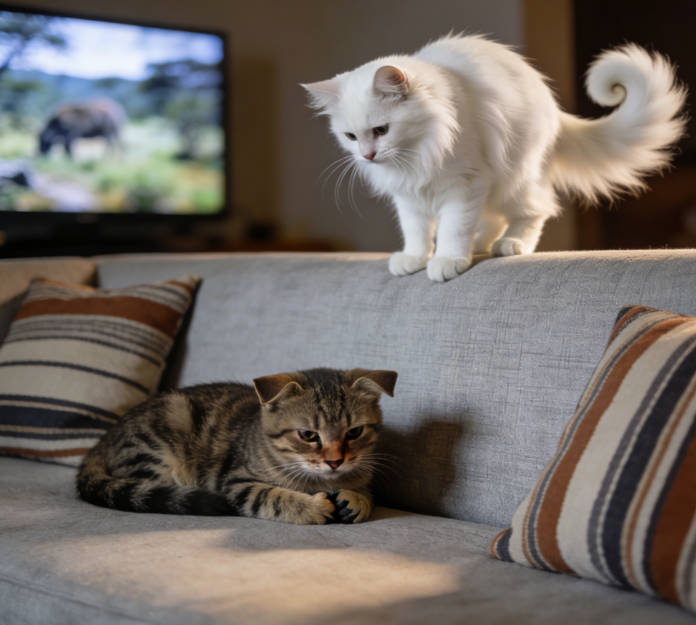
Do you know how little kittens "dominate" among their feline peers?
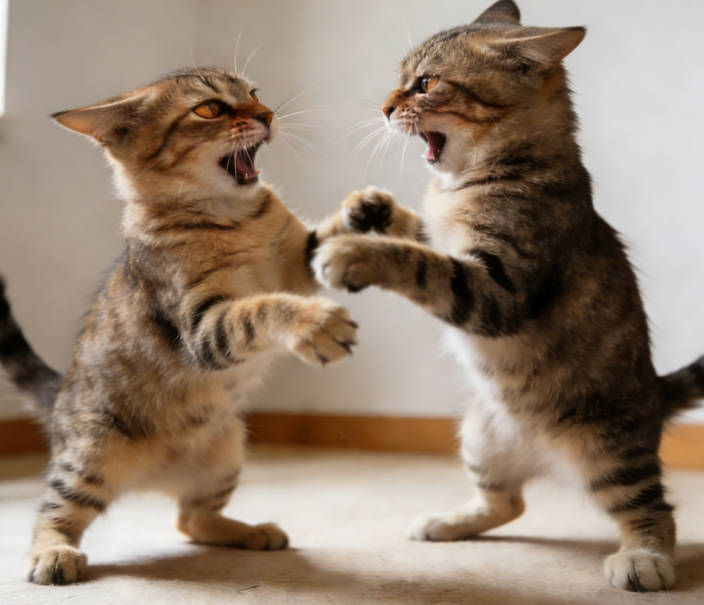
Well, let me tell you today how little kittens showcase their "dominant" status.
Is this my rival for the top spot?
Time to share today's viewpoint!
Cats Don't Have a Strict Hierarchical Order
From watching Animal World as kids, we all know that wolves have a clear and strict hierarchical order, where all wolves must obey the alpha wolf. Similarly, primates like monkeys also have hierarchical structures. To put it bluntly, humans have authorities too, don't we?
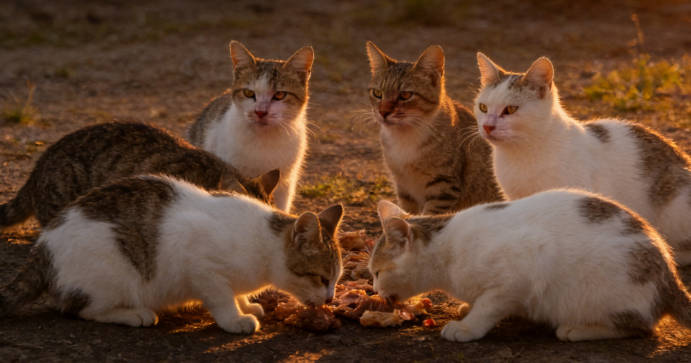
So, do cats have such a hierarchy?
In fact, cats don't have a strict hierarchical order!
Despite having lived with humans for thousands of years, cats are essentially non-social animals. Unlike lions, cats don't live in groups.
However, in rare cases, if there's a common food source, they may form a group of feral cats, but this is merely due to the food bringing them together, not because of a strict linear hierarchical order.
To put it simply, even when cats live together, they consider themselves independent, without leaders or followers. They believe their social status is unique to themselves.
Why do I say that?
Because a hierarchical system implies that those at the top have privileges, such as the alpha wolf having priority in eating and mating.
But cats don't exhibit such behavior. They don't form tight-knit groups or submit to another cat. Even if a cat loses fights repeatedly, it won't become submissive or a follower; at most, it might just avoid the other cat for the rest of its life.
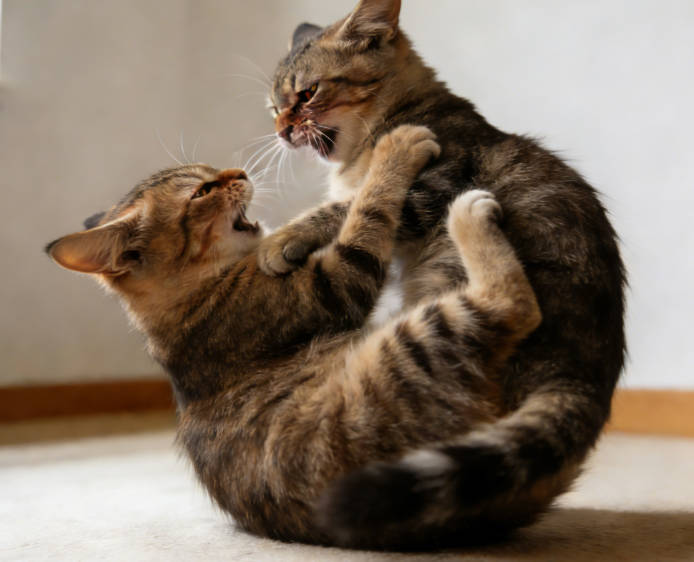
For example:
Cats mark territories at home, but this isn't a permanent agreement. Cat A might give up the sofa to Cat B. However, one day, Cat C might want the sofa too and confront Cat B. If Cat C succeeds, the sofa's ownership transfers to Cat C, but maybe one day, it'll end up back with Cat A.
But that doesn't mean cats don't want to be "top cat."
Although there's no strict hierarchical order in cat society, conflicts still arise. Why is that?
Firstly, it's due to resource competition!
Resources aren't just food; they also include:
"This is my turf; stay away!"
- ① Territorial resources (there's only so much space at home, and everyone wants to be there)
- ② Toy resources
- ③ The owner's affection resources
- ④ Mating and reproduction resources
Secondly, it's just because they don't like each other:
Some cats might be very affectionate with humans but explode when they meet another cat. Why is that?
It could mean that this little cat didn't have much interaction with other cats when it was young and didn't learn proper cat socialization.
"What are you?"
Some cats are highly aggressive, and this aggression often stems from:
Studies suggest that a cat's aggressive behavior is largely due to premature weaning, leading to insufficient cat socialization.
A poor home environment and stress can trigger aggressive behavior born out of fear and mistrust.
Moreover, if a cat has scary experiences during its kittenhood, it might exhibit nervous behavior throughout its life.
- ① Early upbringing
- ② Current home environment
How Cats Show Their "Dominant" Status
Cats aren't fond of fighting; they generally try to avoid it if possible.
They first use subtle hints to convey their intentions to acquire, defend, or leave a resource and show signs of aggression until they reach a consensus.
When competing for resources, cats have various direct and indirect ways to defend "what's theirs."
I. Direct Confrontation
Direct confrontation involves two or more cats facing off directly.
The unwilling cat will warn and threaten its opponent.
Then we'll see the following scene:
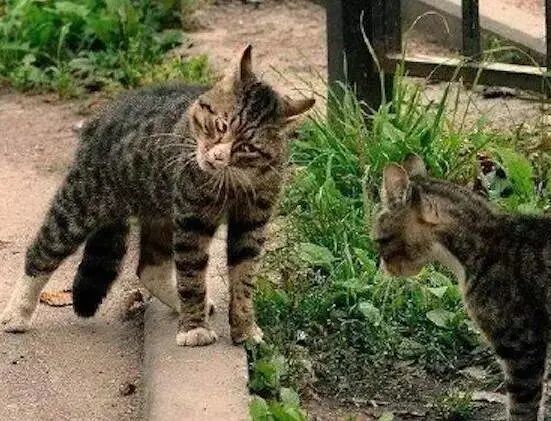
Two cats stare tensely at each other, their ears stiffen and turn to the side, their heads tilt, the bases of their tails raise while the tips lower, their limbs stiffen, and they walk upright.
Besides physical threats, there are also verbal threats: screaming, howling, growling, hissing, and making strange noises.
When neither cat is willing to back down, they'll start getting physical.
They'll close in on each other, almost head-to-head.
One cat (usually the more aggressive or agile one) will pounce on the other.
Meanwhile, the weaker one, at a disadvantage, will quickly spring back after physical contact. However, they'll attack each other again until one decides to give up.
The fight might stop only when one side admits defeat, which is shown by:
Ears flattened, eyes looking away, body posture curled up, and not resisting.
II. Besides direct confrontation, there's also indirect confrontation:
Indirect confrontation refers to cats taking preventive measures to acquire resources. Indirect confrontation includes:
"Leaving my scent; this is mine now."
- ① Urinating and spraying
- ② Rubbing against objects to leave their pheromones
Now you know how your cats "dominate," don't you? I must say, they're quite civilized about it.
Comments (50)
Pet Lover
Great article! Very informative for pet owners.
Cat Parent
Thank you for sharing this helpful information!